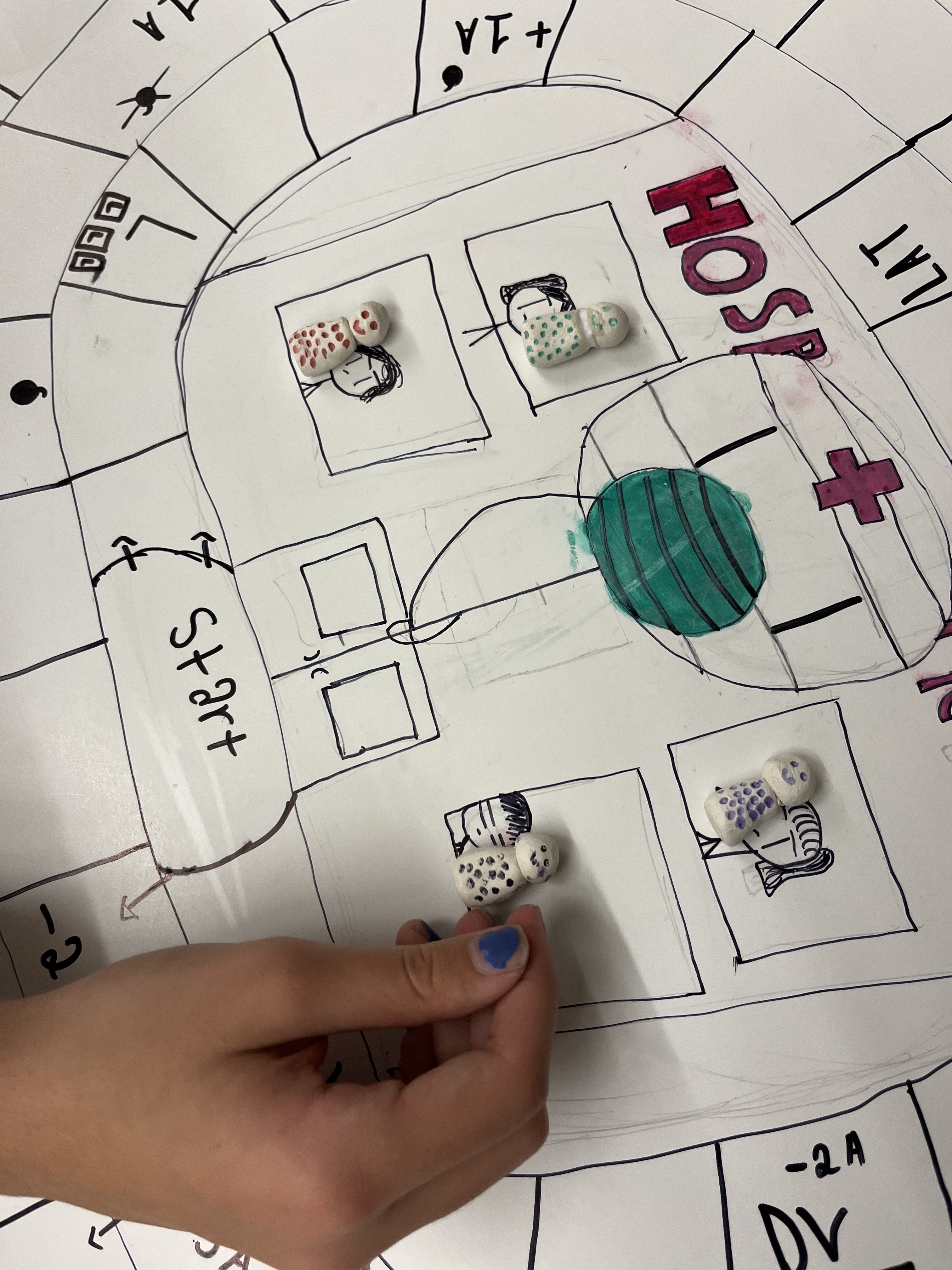
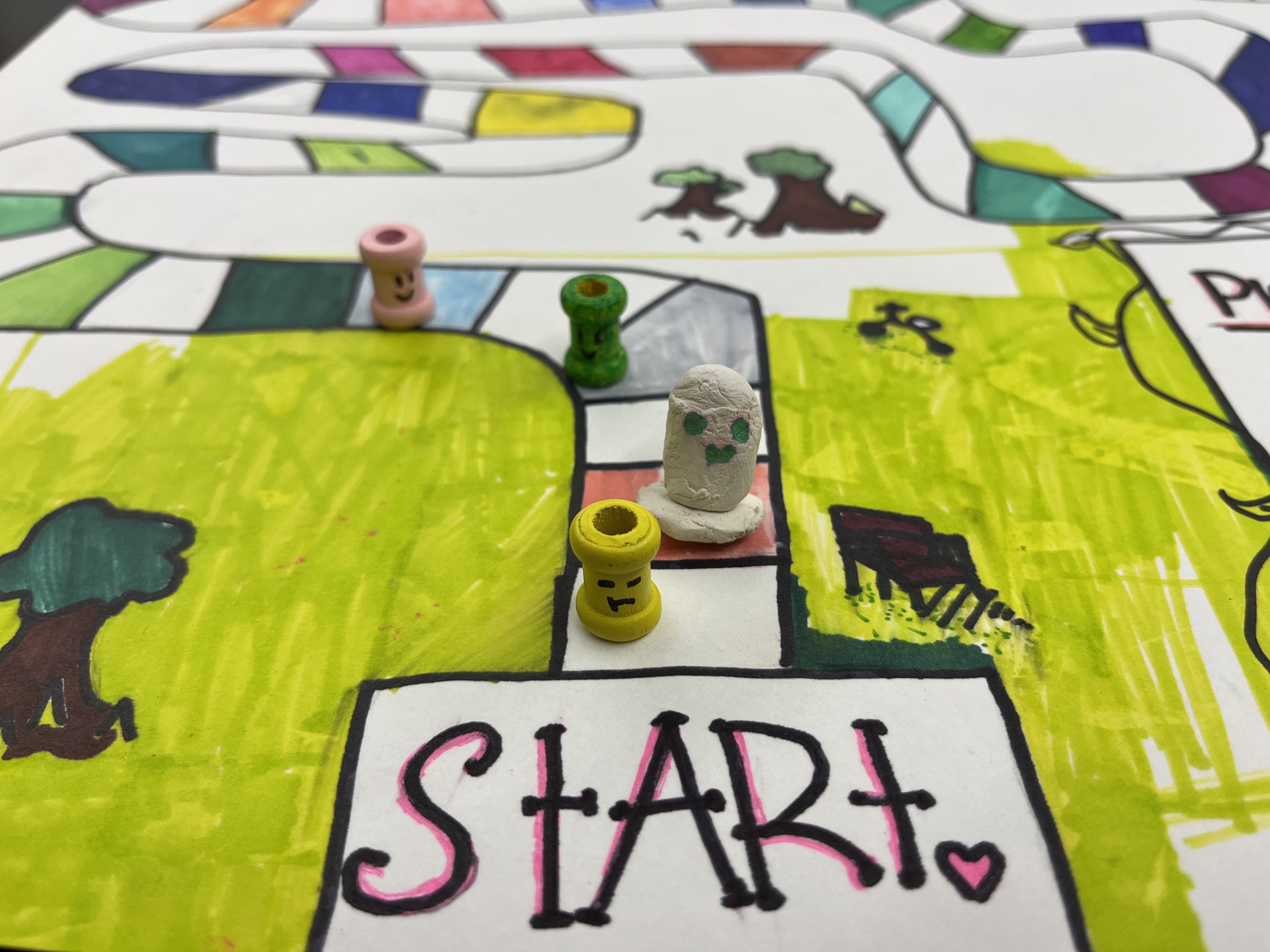
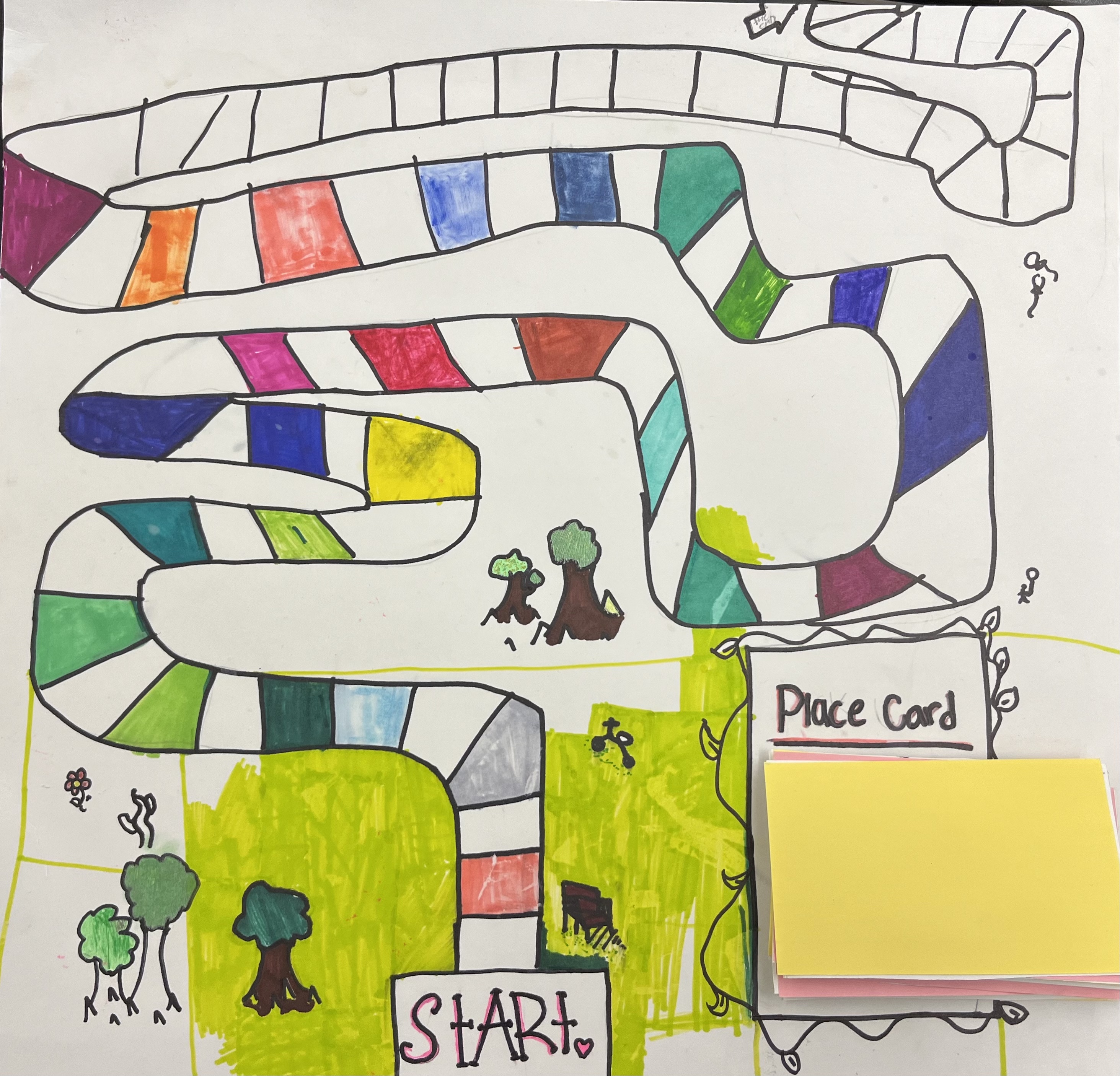
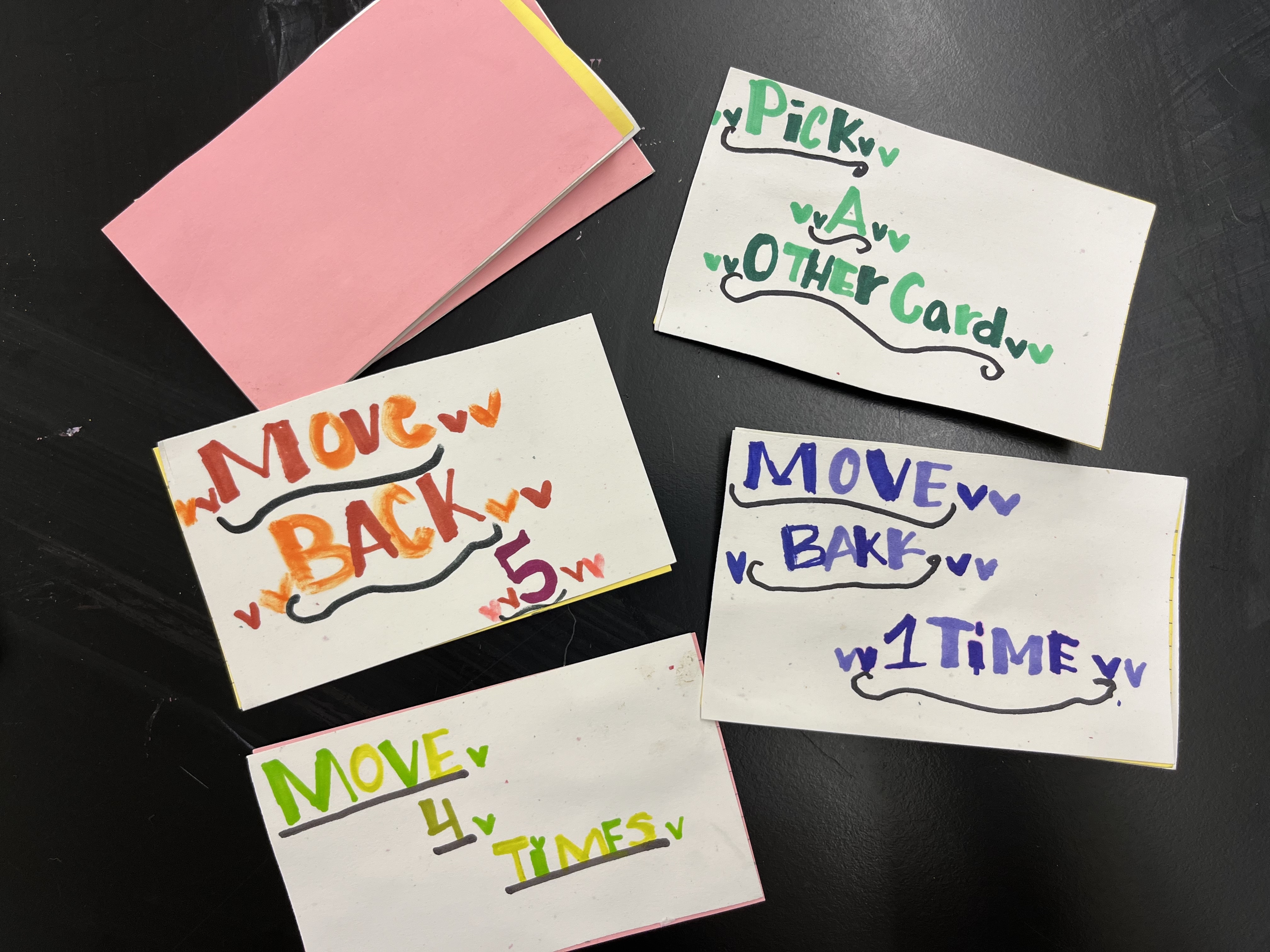
Student setting up the pieces for their game “An Apple a Day”
I really like games. Some of my sweetest memories include summer evenings playing Catan, or days when my housemates and I played nonstop rounds of Banangrams, eating cookies and/or popcorn while we all avoided the last seen Q tile. I like for a game to have some degree of strategy, but I would say that I’m not too picky. I am randomly quite good at the train themed game “Ticket to Ride,” so if art/teaching stuff doesn’t work out maybe I’ll become a wealthy train baron, forging the railroad across the continental US one track at a time.
When I first moved here I started attending community game days organized by Flatbush Mixtape at the Flatbush Central Market (both organizations are amazing). I was hoping to meet people in my community and this ended up being a great choice because games truly do bring people together. Even a “competitive” game is still in many ways collaborative-you have to work together to learn the rules, communicate about turns, swap or trade cards, etc.
By talking to my fellow game players I learned that one woman was in the process of designing her own board game. This made me have a :0 moment (woah moment). If you are like me it is sometimes kind of shocking to remember that books, movies, and even games are made by real people.
So basically this inspired me to have my students create their own games. My basic idea was that this would be a good way for them to work collaboratively, work with a lot of different materials (making 2D boards and cards, and 3D game pieces), and think creatively- because the project was so open ended. I hoped that the unit would facilitate everyone connecting and getting to know each other, the way that games have previously functioned many times in my life.
And maybe it worked? It’s hard to say. There are some things that I think worked well in this unit, some things I would change, and a lot that I learned from. I’m really impressed with what the kids made so I’m going to share a few photos of their work, along with some of my reflections:
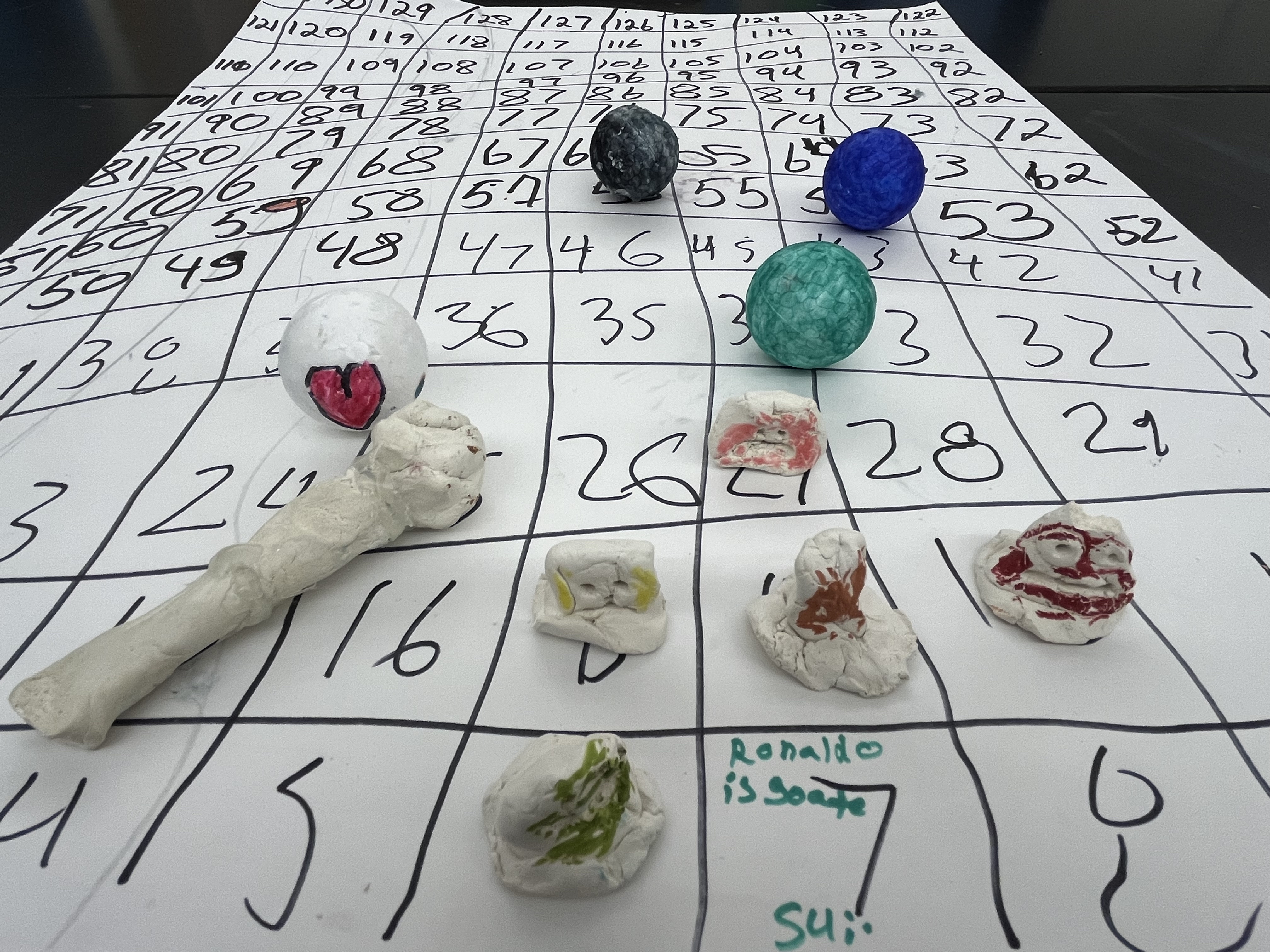
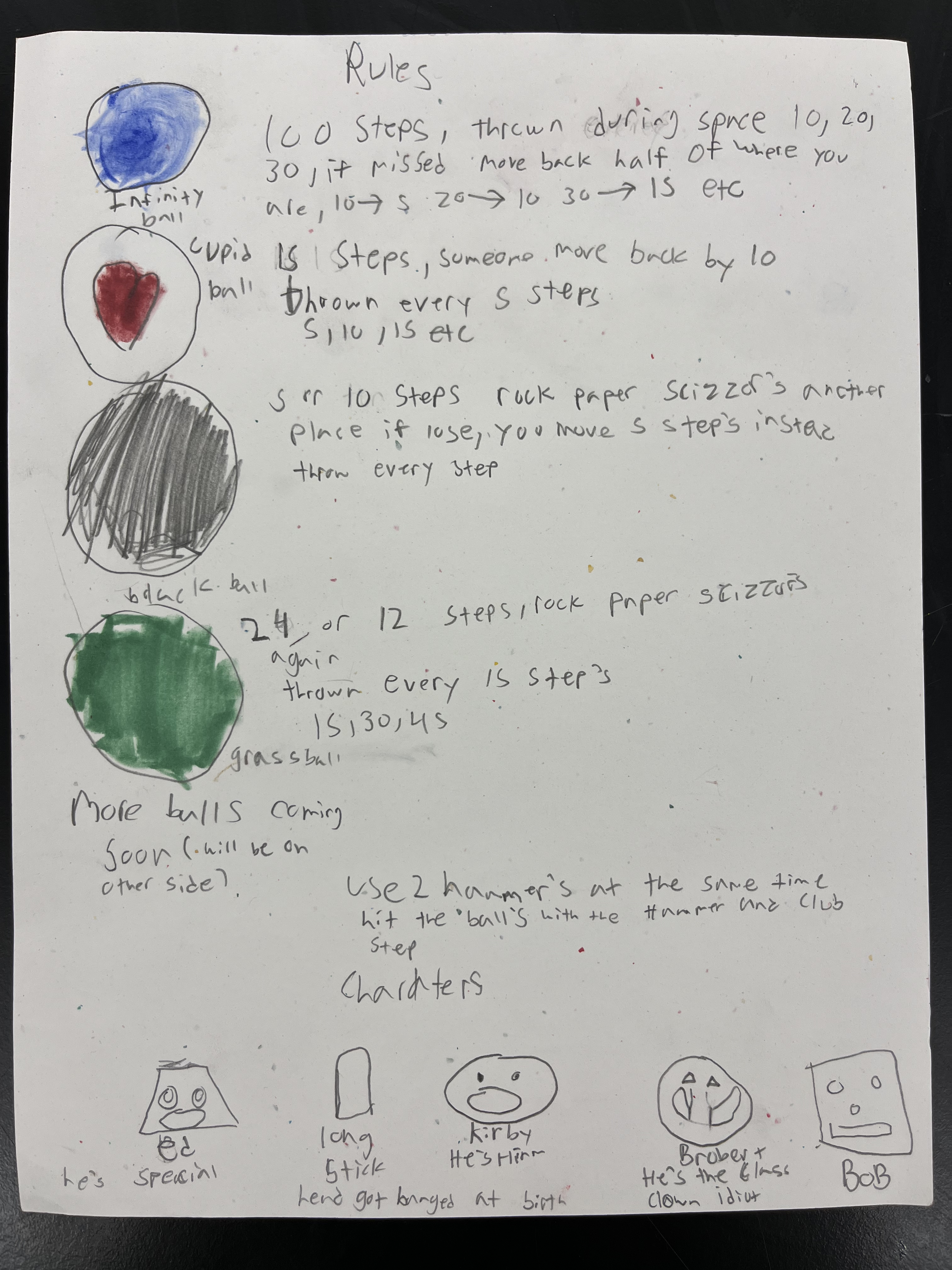
“Smash or Crash” and its rules
Trying my very hardest not to censor student art
For their initial game idea, 7th graders D, J, and M’s concept was a game where there are figurines of their friends (other students in class) that players must smash apart with a big hammer. Whoever smashes the most, wins. When J told me this idea I felt torn because they were all excited about it, but it also seemed to have a violent theme and I worried that making representations of other students with the intent of destruction could be problematic. I don’t really buy into the idea that violent games encourage kids to be violent, but I did think that this project would be the sort of thing that parents and my bosses would probably not love.
I decided to let them continue with their plans so as to not censor student art. However the next class I brought in some bubble wrap with the hope that different materials could get them to consider different, um, routes, in their project. “Your players could smash the bubbles!” I said. “That’s boring!” they said.
The class after I brought styrofoam balls and air dry clay. This they actually liked! They got so busy with coloring the balls different colors and assigning different points to each color that they seemed to forget/discard the idea of smashing people. A lesson for me is that it’s always better to frame options for students in terms of what they can do, rather than what they cannot do. In this case I didn’t have to actually tell them “no” to anything because they themselves made revisions to their project. And having the different tactile materials (styrofoam and clay) was a useful way to stir up their creativity.
I love all the little quirky touches to this game, like how square 7 says “Ronaldo is goat” and the rule sheet bears the promise of “more balls coming soon.”
.
.
.
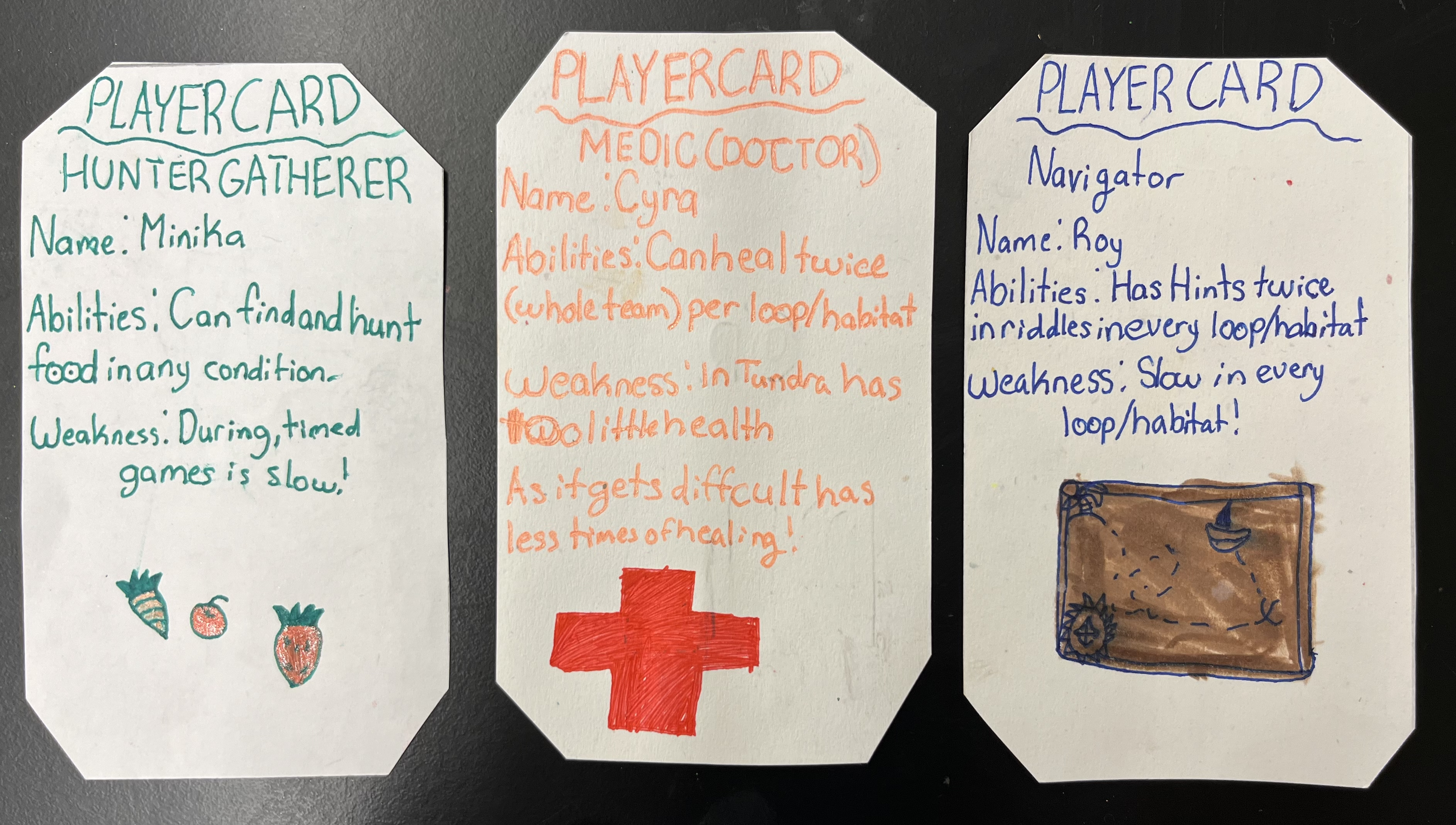
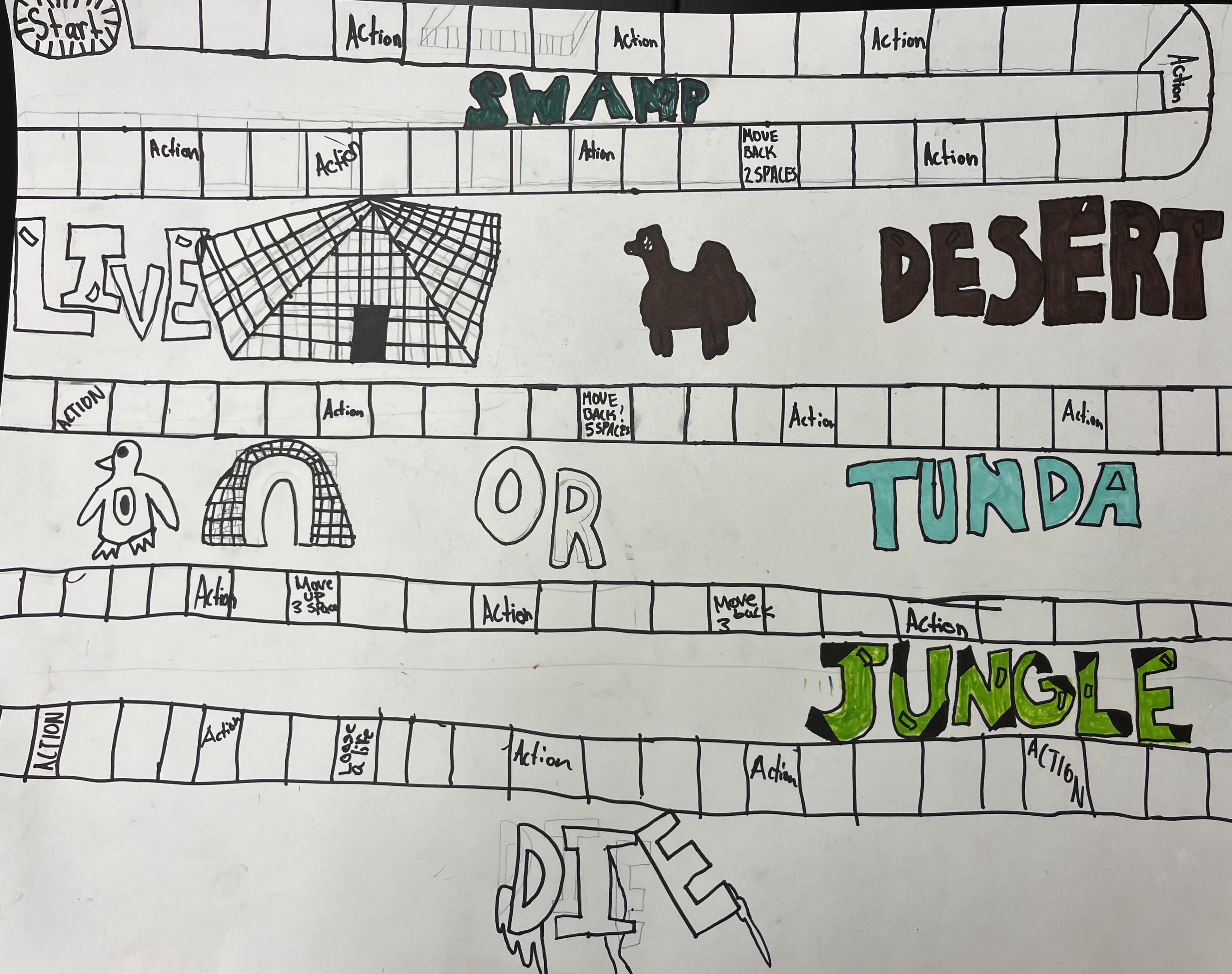
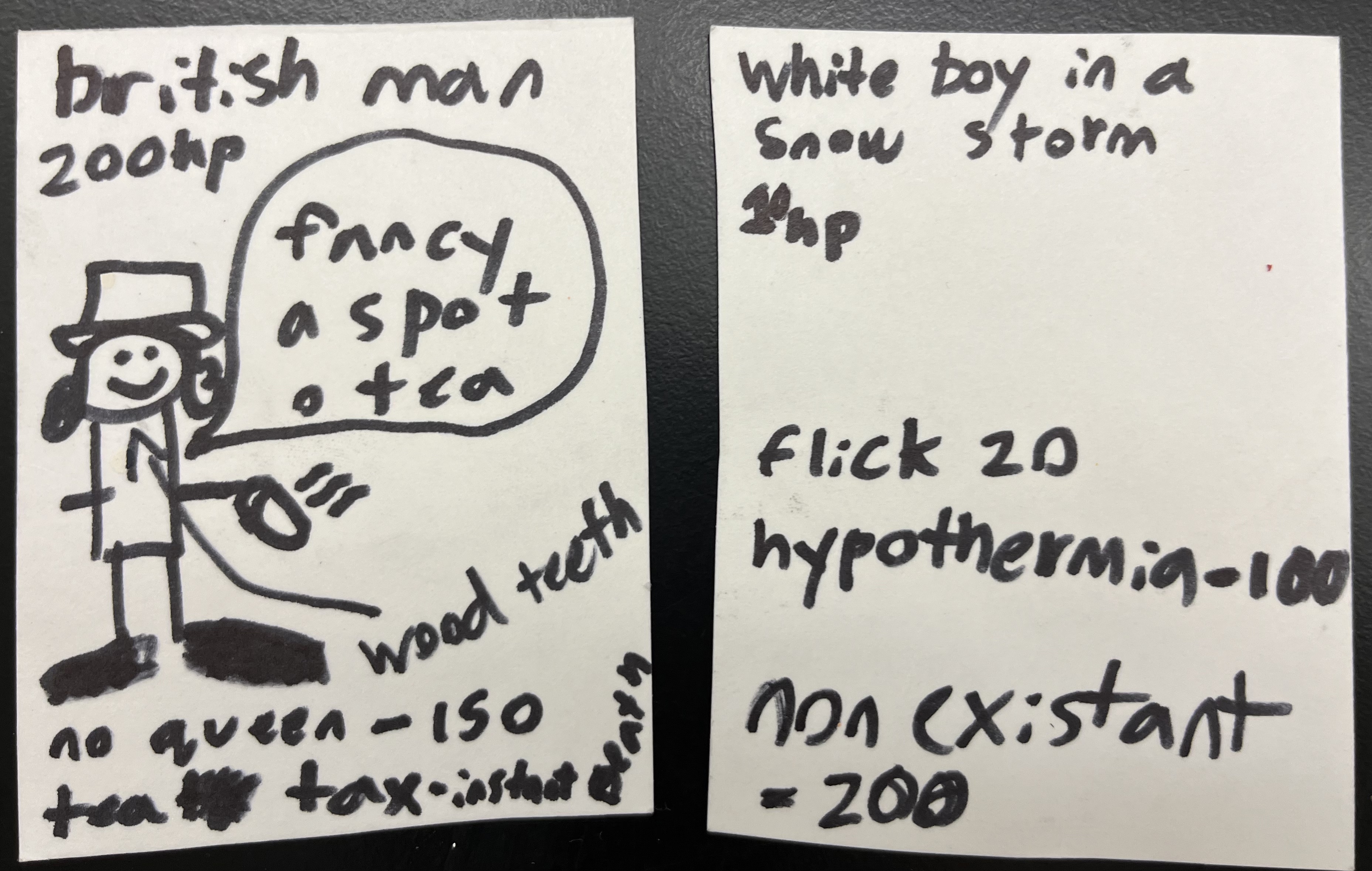
“Live or Die” player cards and gameboard
Everyone loves a story
7th graders C and J both started coming to after school art a little bit later in the year, so I worried that they might have a harder time approaching the game design unit since everyone else had already begun. But they impressed me by quickly becoming very invested in their project, and working hard on every little detail. My main reflection here is just that people are going to care more about something if there is a story they can get invested in. I think that C and J were so engaged in their game because they did a lot of world-building and made characters that they cared about. Imagine the core of their game, “move along a path until you reach the end” if there wasn’t a high stakes adventure theme -it wouldn’t be half as fun. What player would you want to be? I think I would choose Cyra, the medic. Roy seems kind of like a weak link, tbh.
.
.
.
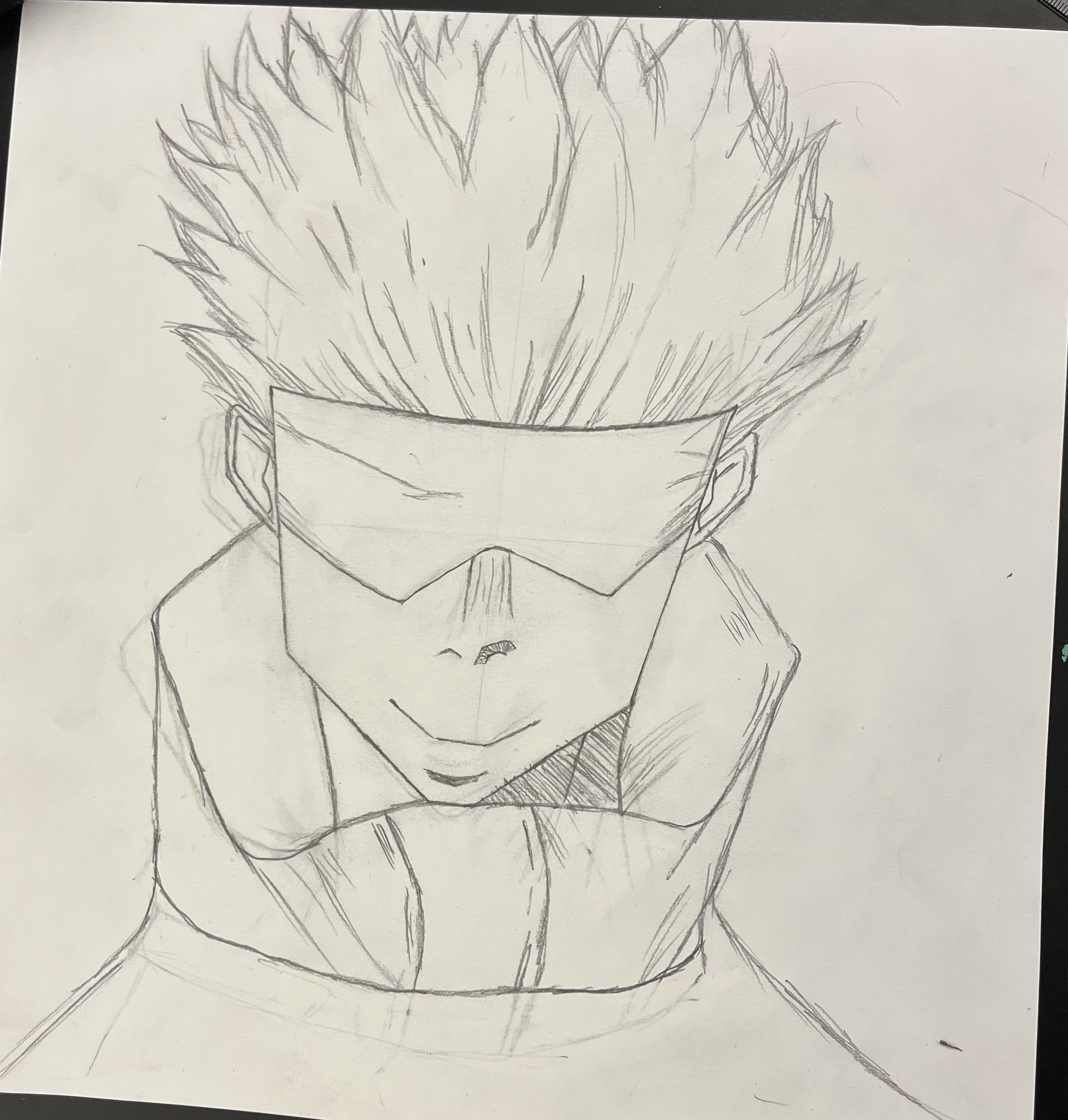
Drawing of Satoru Gojo from the manga Jujutsu Kaisen
Gojo says “listen to kids!”
8th graders A, J, and X are all good friends who originally were going to have a maze themed game, but they weren’t very excited about it. They would start drawing the maze, then stop and start over with evident frustration and boredom. I think they also struggled to work together well because they got caught in a lot of arguments about what a fair division of labor for making the game would be. In hindsight I wonder if there were things I could have tried early on to help them, like encouraging them to add more of a “story” to their game, or trying to mediate their conflicts more.
But by the time we were a few weeks into the project they were definitely tired of it, and I was tired of trying to get them to do it. J said things like “When are we going to do real art?” and “I don’t want to be an inventor, I just want to draw.” This did hurt my feelings and I felt pretty bad.
The next class I brought printed out worksheets of “how to draw monsters” to try to inspire him to draw a monster for their board game. He responded with “Ok, sure, I guess” and then didn’t do them and sketched in a disengaged way. I was trying to be sneaky, to get him to do something that in some way connected to the game, but he saw through this. I’m sure that it made my gesture at “look I’m letting you do what you want to do” feel disingenuous.
The next class I simply gave him paper, a pencil, and my laptop to look up whatever it was he wanted to draw, he was so much more engaged. Him and A both drew Gojo, told me about the manga, and we chatted a lot while they worked. I realized that it’s so much easier to connect with people when you’re not trying to make them do what you think they should do. I don’t want that to be my role. I want to be someone who students trust, feel supported by, and who helps them foster their own creativity and individuality. I want them to feel like they belong, like their art matters, like they matter so so so much because they do. And I want to “listen” to kids rather than just “hear” them.
.
.
.
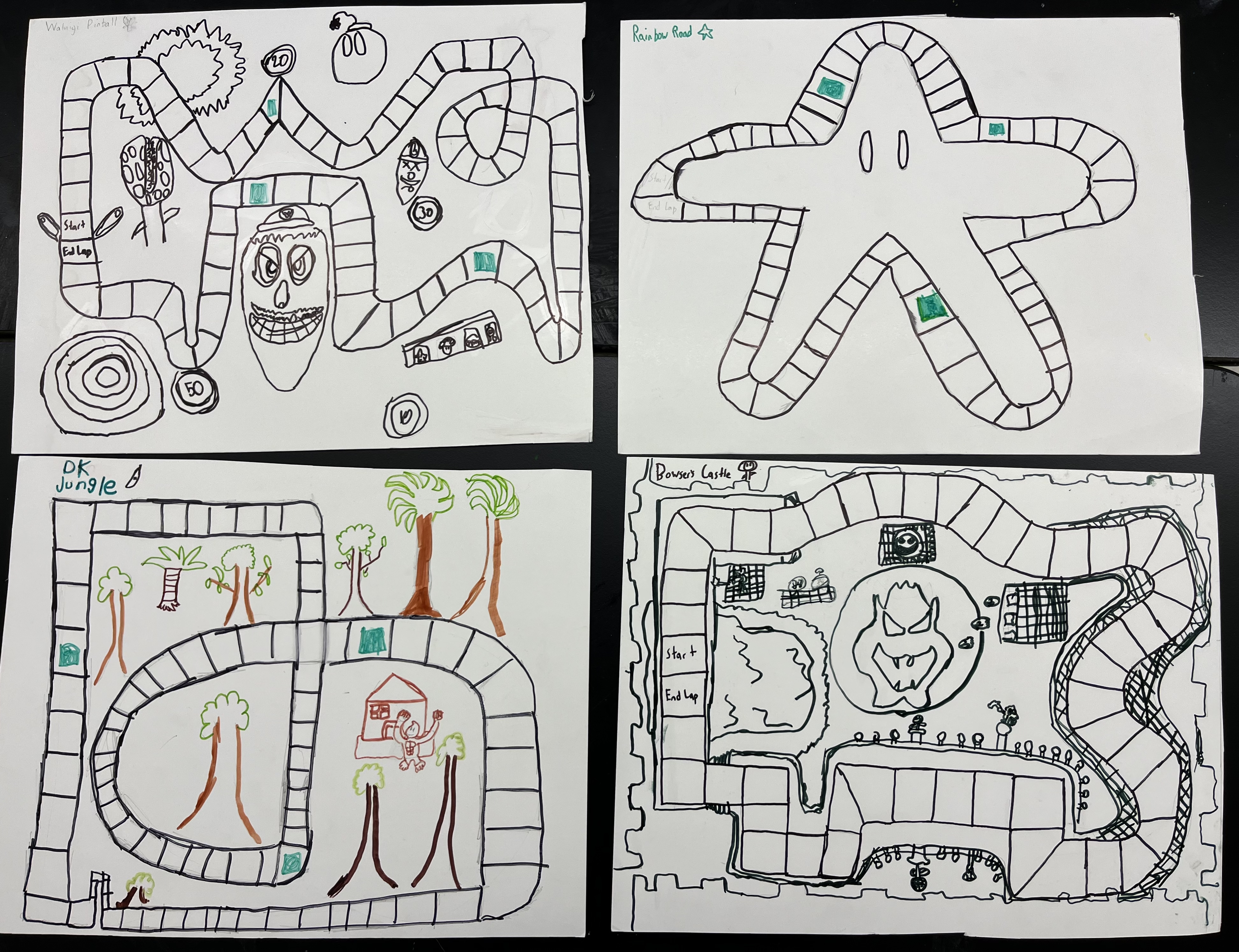
“Mario Kart Board Game GP”
Shared context –> making friends
C and G are 7th graders who worked as a duo to make a set of board games inspired by the video game Mario Kart. I don’t think of this at all as copying, but as a jumping off point for their creativity, a toehold into the pop culture that interests them, and a practice of imitation, a skill that all artists use to some degree. And they did a great job -I especially love the representation of Waluigi (in the upper left). C and G also had fun working together. On the survey I had students fill out about the game unit, in reponse to “What is your favorite thing about your game?” G wrote “Working with C. This guy cracks me up.” I find their friendship very heartwarming.
M is another student who started coming to after school art later than everyone else but he decided he didn’t want to make a game. That’s a choice I respected but on “Game Day,” the end to the unit where everyone had opportunities to play the student made games, I encouraged him to find a game to play. He was a bit reluctant but I pointed out how C and G’s game was a lot like Mario Kart, which he probably has played before. I pulled up a chair for M at C and G’s table and they all really took to playing the game together -talking and laughing as they played. I feel really good about that because M often sits alone, so it was nice to see him have fun with other students, and I think it was affirming for C and G to see their game be truly played. I’m not suggesting that they will all be best friends now, but I think it’s nice to have this project lead to some community building among students which was my hope. This is in part made possible by giving them the freedom to make Mario Kart inspired projects, because that is a shared cultural touchstone for a lot of kids.
.
.
ANYWAYS now game design unit is over and that is good because 6 weeks felt like a longggg time. I love a long term project for giving people the time and space to think deeply about their ideas, make changes, and experiment. But it also felt hard to manage for me, because I just started, was/am still getting to know everyone, and also after school is just inherently disorganized. I’ve been doing painting projects with 6th grade in a more social justice and culturally responsive way, and that has had its own rewards and challenges that maybe I’ll make another post about.
For now I’ll say that I am very grateful for my students and the existence of board games and here’s a few more photos:
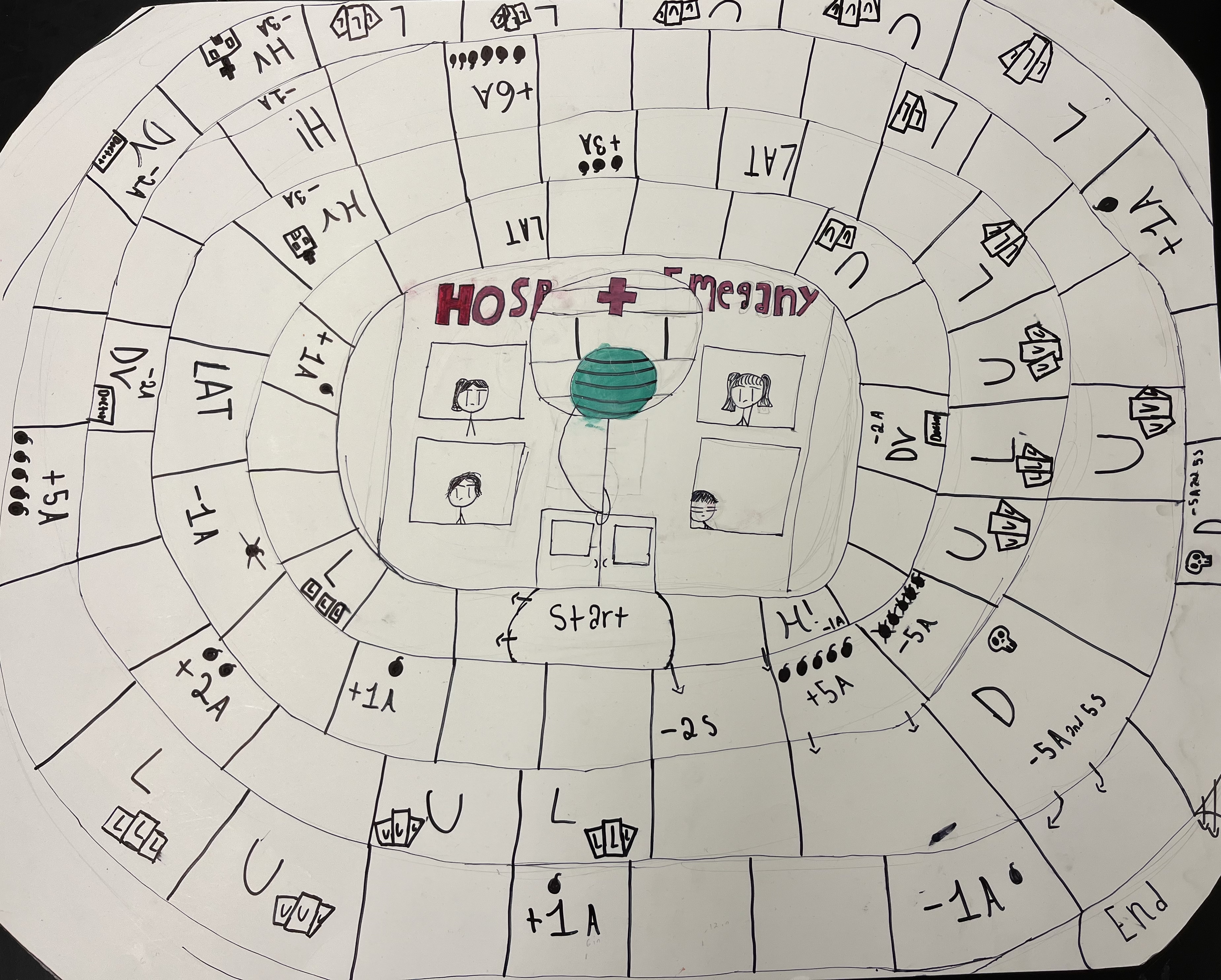
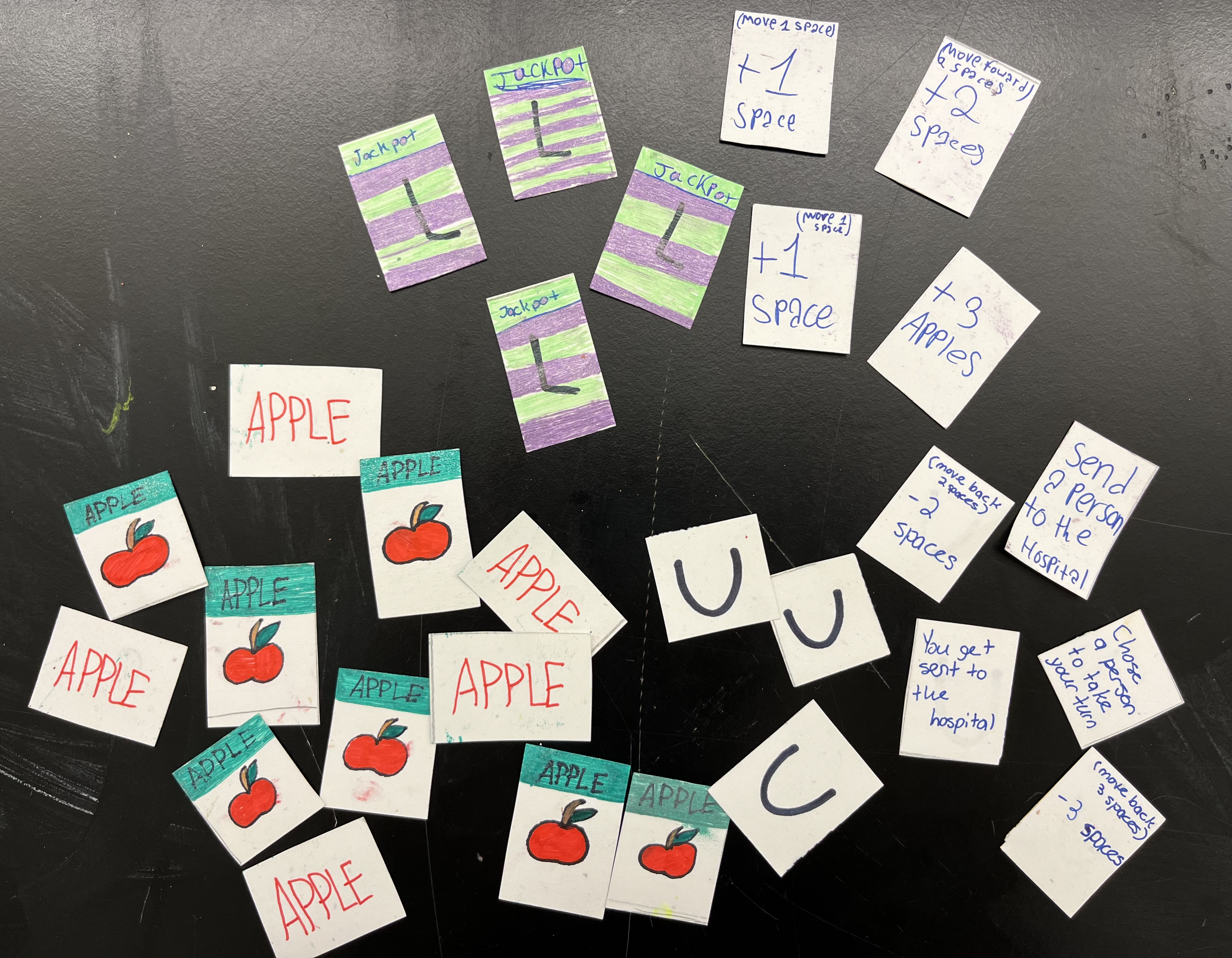
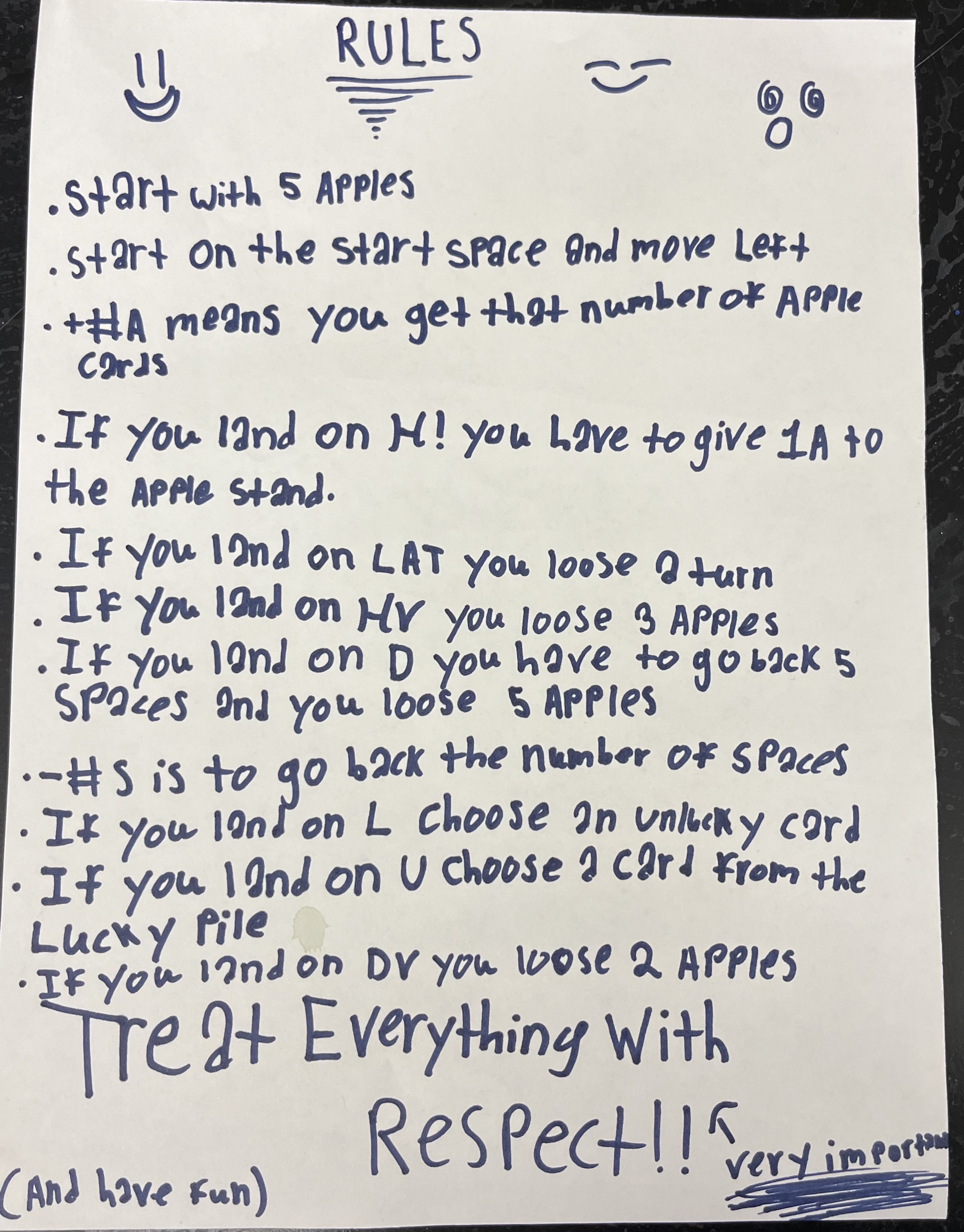
“An Apple a Day”
.
“Forest”
.
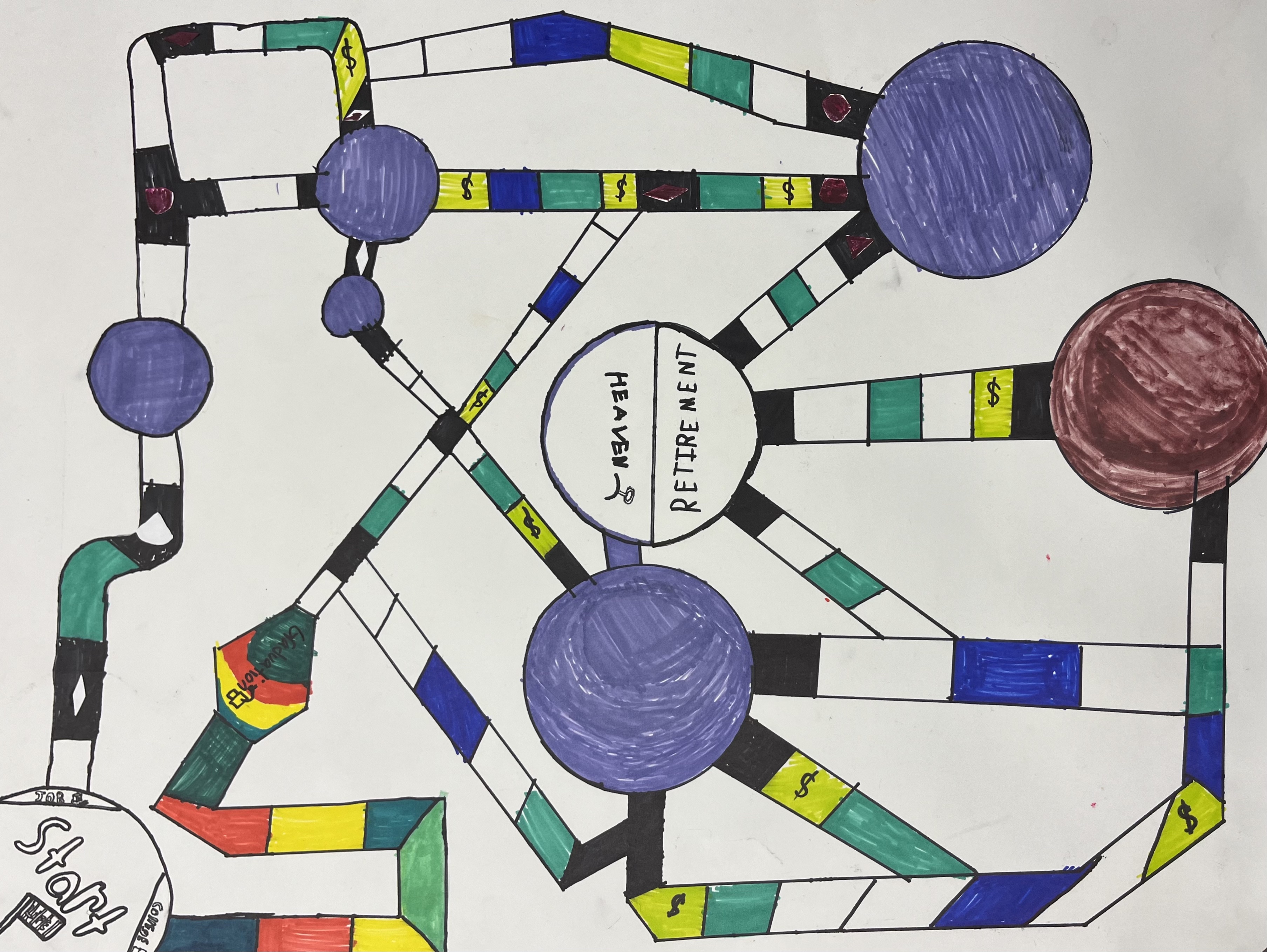
“A Rollercoaster of Life”
.
“Smashy Bros”
.
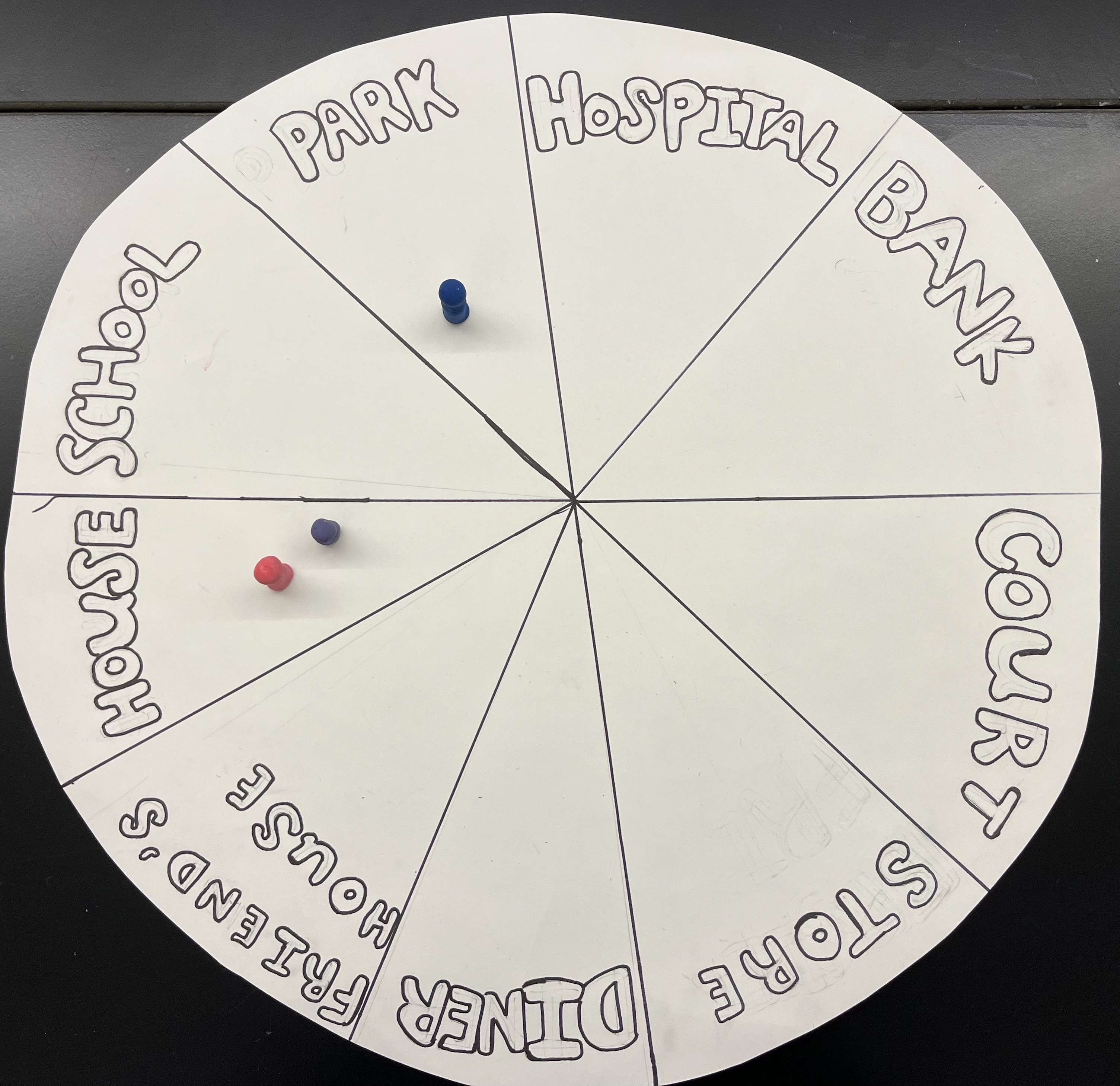
“Divorce!”
 CHLOE LEVIN
Leave a comment